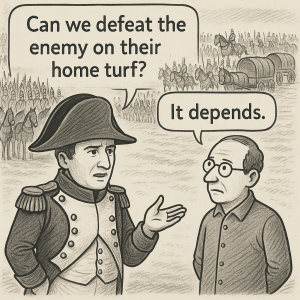

What are the Best Maintenance KPIs? It depends.

Lies, Darn Lies, and KPIs. KPIs for Reliability and Maintenance

At IDCON, we specialize in helping maintenance and reliability professionals discover and apply the best Maintenance Key Performance Indicators (KPIs)  to achieve real, measurable improvement. The right KPIs go beyond reporting numbers — they help teams focus on what truly drives reliability, efficiency, and plant performance. Whether you’re refining your maintenance strategy or starting your reliability journey, understanding and using the best maintenance KPIs can turn data into action and results.

In this article we’re detailing KPIs for three key Reliability and Maintenance processes: Leadership and Maintenance KPIs, Work Management Planning and Scheduling KPIs and Materials, Spare Parts and Storeroom KPIs. 

Purpose of Maintenance KPIs

Are Maintenance KPIs used to drive improvement or simply to make performance look good? When used properly, KPIs are a powerful management tool. When misused, they can distort priorities, encourage bad behavior, and undermine operational goals.

The Danger of Toxic KPIs
KPIs become toxic when they prioritize narrow goals over broader operational effectiveness. In strategic purchasing, for example, focusing solely on low-cost raw materials and payment terms conflicted with production yield. When we suggested cross-functional collaboration to my manager, his reply was: “My bonus depends on PPV and Payment Terms—so that’s not my problem.”   

Another example: a manager mistakenly over-ordered raw materials and hid the excess in an unknown warehouse to avoid inventory penalties. These behaviors stem from poor KPI design—not from a lack of personal integrity alone.

Effective R&M management is process-driven and people-focused. The foundation includes:

“If you can’t describe what you are doing as a process, you don’t know what you’re doing.”           W. Edwards Deming

Lagging vs. Leading Maintenance KPIs - What's the right focus?

Lagging KPIs measure outcomes—such as OEE, downtime, and maintenance cost—but don’t reflect day-to-day execution. Leading KPIs track compliance with processes and help drive the right behaviors. Measuring only cost often leads to cutting preventive tasks, which can degrade equipment over time and increase total cost.

To effectively manage reliability and maintenance leadership should focus on the execution of core processes. 

Beware of Vanity Metrics like Wrench Time
Metrics like wrench time or “time on tools” can be misleading. High wrench time during unplanned repairs is not a sign of efficiency. Planned, scheduled work completed on time is a better indicator of an effective maintenance strategy. KPIs should reflect true value-added activities, not appearances.

Office Efficiency?
If field staff are scrutinized for every minute, should we apply the same to office work or Gemba walks?  The point: focus on effectiveness, not optics.

Basic Maintenance KPIs and Benchmarking

You should start by establishing a baseline and using trend analysis. Targets should be realistic and progressive. Choose KPIs based on your current maturity level, strengths, and improvement priorities. The chart below shows a few key benchmarks.

Maintenance KPIs

Activity-Based KPIs Drive Improvement
Too often we hear “we’re working on reliability,” but what does that mean in practice? Instead of vague statements, track specific, actionable activities—e.g., “Lubrication routes completed on time,” or “All lubrication tasks documented in Maximo.”

KPIs should clearly link organizational goals to maintenance activities:

  • Goals: Improve OEE, reduce $/ton, improve safety
  • Processes: Work management, PM, parts, leadership, training
  • Activities: Scheduled work orders, PM compliance, kitting, RCA

The “Budget Jail” KPI Trap
Benchmarking maintenance cost across plants can be misleading without considering maintenance debt—the cost to restore equipment to standard. If a plant with historically low spending has degraded assets, its future budget needs will be higher. Cost goals should reflect asset condition and maintenance maturity—not just comparisons.

Safety KPIs: Be Honest
Prioritizing safety is essential, but punishing honest incident reporting fosters a culture of fear and concealment. This leads again to “damned lies.”

Beware of Stagnant Maintenance KPIs

Many businesses approach KPIs once, and they may not consider the specific behavior they’re trying to drive.  Then once KPIs are in place, it’s often akin to an Act of Congress to get them changed, even if it’s discovered they’re driving destructive behavior.  As your organization matures so too must your KPIs. 

Why are Maintenance Work Management KPIs Necessary?

In today’s competitive industrial landscape, effective work management planning and scheduling aren’t just the best practice; it is essential for safety, quality, increased equipment availability and profitability. Work Management is the foundation of all maintenance and reliability processes. It provides the necessary structure and discipline needed to ensure maintenance activities are carried out effectively and efficiently. High-performing maintenance and production organizations rely on data-driven Key Performance Indicators (KPIs) to optimize resources, minimize costly downtime and drive continuous improvement.

Essential Work Management KPIs That Drive Continuous Improvement

If your organization isn’t tracking the number of weeks of backlog for each trade group, you aren’t managing maintenance. Backlog isn’t just a metric – it is the foundational element of proactive maintenance. Without it, you’re not allocating resources effectively and overlooking how much work there is.

Schedule compliance has its place if calculations are not manipulated. A basic measure of scheduling effectiveness. High compliance equates to a schedule that is protected by minimizing reactive work and assigned work is coordinated between departments. If your organization has a 100% schedule compliance week to week, I’d say it is not a TRUE representation of reality within your organization.

Highly reactive work cultures have a high emergency work percentage, which makes sense. This is a costly way to do business. Emergency work needs to be monitored to ensure only “true” emergency work is executed. Initiate the migration away from the “emotional priorities” that erode your maintenance budgets.

How well are Hourly Trades utilized? Ensure your schedule is developed with planned work.  If your trades are chasing parts, tools, mobile equipment or documentation you need to increase the % of planned work on your schedule.

When you see an increase in the lagging indicator such as Overall Equipment Effectiveness (OEE), your organization is making data driven decisions and identifying adjustments based on the leading indicators to improve the work management process.

The "Best" Storeroom KPIs?

When it comes to knowing what  the “best” Key Performance Indicators (KPIs) for world-class (MRO) storeroom Management, we have a joke:  

What did Napoleon’s Supply Offficer say when Napoleon asked if they could win at Waterloo? “It depends”.

An Overused Storeroom KPI

If a storeroom is measuring anything, it’s probably total inventory value. Of course businesses need to be aware of the value of all their assets, including parts inventory. The key question is: what will we DO with this metric as a Key Performance Indicator? Normally businesses want to reduce their inventory value.  (Lower is better, right?) And there are real costs to maintaining a high inventory value, and benchmarks as to what it should be. We can quickly tell when a stockroom is out of control, partly by checking the dollar value. But having a lower inventory value for its own sake is not a valid business strategy.

An Underused Storeroom KPI

How many are tracking stock-outs?  And by stock-outs, we mean each time a part is needed and not available, whether on the inventory list or not.  In so many plants we see, it’s not even considered as a metric, let alone a KPI.  Some may track the cost of inventory; how many track the cost of parts unavailability?

How much does it cost when the line is down awaiting a part?  How about even expedited shipping costs?  If we track the time we lost awaiting parts or at least track the number of times a needed part has not been available, we can start to prioritize storeroom management within the larger context of Reliability.

What is the specific mission of a storeroom…surely not to be as low a value as possible?  We would suggest that it’s to have the correct parts when they are needed.  Measuring stock outs then becomes the best way to measure that.  And the old reliable measure of inventory accuracy achieves an important 2nd place. On inventory accuracy, we really need to get inventory record accuracy close to 100% to avoid stock-outs, which should be below 4%.

A critical metric the Stores supervisor should track and provide is inventory accuracy.  The only thing that makes a face longer than just not having the part you need is when the system SAYS you have the part and then you don’t!

How Should Maintenance KPIs be Captured?

We’ve seeen individuals work harder at manipulating  data to achieve desired results rather than reporting the real numbers to reflect work management process opportunities. In most cases, this is driven by management that does not really understand the necessary time it takes to fully implement the process.

We believe setting up automated KPIs ensures data integrity, allows organizations to detect process improvements and make timely, informed corrective actions. There are many Business Intelligence (BI) tools available for organizations to extract and analyze from various data sources or involve your IT department to leverage your current CMMS.   Need help with configuring your CMMS/EAM for automated KPI reports? Contact the experts at Total Resource Management, IDCON’s parent company. 

Authors

At IDCON, we understand the pressure you face trying to build a reliable plant.
We provide side-by-side reliability and maintenance consulting and training designed to keep your equipment running.

For over 45 years, we’ve partnered with 100s of manufacturing plants around the world to eliminate the costs and the pressure caused by unreliable equipment. And we’d love to do the same for you.

Contact us today to see how we can help you keep your plant running.

Related Articles

Picture of Owe Forsberg

Owe Forsberg

CMRP, CAMA, VP of IDCON Consulting Group

Want weekly Reliability & Maintenance Tips?

"*" indicates required fields

This field is for validation purposes and should be left unchanged.

Best practices. Common sense. Pratical tips.
All designed to help you and your team keep your plant running

IDCON © 2025 All rights reserved

IDCON © 2025 All rights reserved
8-step-checklist-preventive-maintenance-program-download
Free Download & Video

8 Steps to Successfully Implement Preventive Maintenance

Reduce your costs with an effective PM program

This field is for validation purposes and should be left unchanged.